US Strikes Iran: Stunning Map of Latest Attacks


US Strikes Iran have sent shockwaves through an already volatile region, and the latest map of reported attacks suggests a campaign that is broader, more carefully sequenced, and politically more dangerous than a single overnight raid.
What stands out across coverage from Al Jazeera, Sky News, and RT is not just the scale of the strikes, but the different ways the story is being framed. Some reports emphasize the precision and military logic of the attacks; others focus on the human and diplomatic fallout; and some place the greatest weight on whether the operation will deter Tehran or instead pull the region toward a wider conflict. Put together, the picture is less about a clean tactical win than a fast-moving strategic gamble.



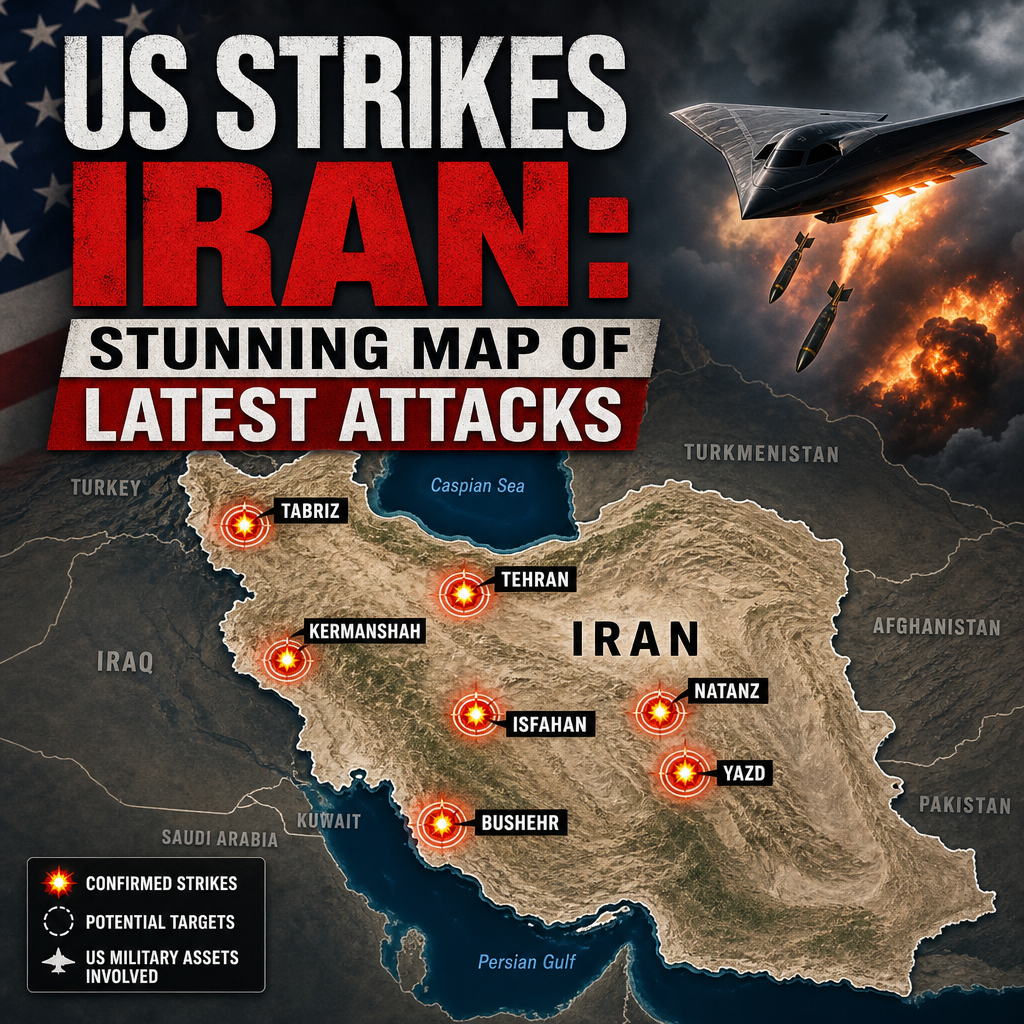
What the latest strike map suggests
The emerging map of the attacks points to a pattern that is familiar in modern air and missile warfare: multiple targets, dispersed geography, and an effort to hit strategic infrastructure rather than rely on one spectacular blow. That matters because it suggests planners were not simply looking for symbolism. They appear to have aimed at degrading command capacity, air defenses, or nuclear-linked infrastructure, while limiting the exposure of their own forces.
From the reporting available, the strikes also appear designed to send several messages at once:




– Iran’s deterrence network is being tested.
– Regional allies and proxies are being warned not to escalate.
– The US wants to show it can act decisively without immediately launching a ground campaign.
– Diplomacy, if it returns, will do so under pressure rather than from a position of calm.
That said, the map alone does not settle the most important question: whether these attacks meaningfully change Iran’s calculations. Airstrikes can destroy equipment and disrupt operations, but they do not always produce compliance. If anything, history suggests that heavily targeted states often respond by dispersing assets, hardening defenses, and increasing retaliation through indirect means.
US Strikes Iran and the case for deterrence
One reading of the strikes, echoed in more security-focused coverage, is that Washington is trying to reestablish deterrence after a period in which red lines may have blurred. From that perspective, the logic is straightforward: if Iran or its aligned groups believe attacks on US interests carry limited cost, escalation becomes more likely. A forceful response is meant to reset expectations.
Supporters of that view can point to a few practical arguments. First, a limited strike campaign is less escalatory than a full invasion or prolonged occupation. Second, if precision weapons hit the intended targets, the operation may buy time for diplomacy or defense reinforcement. Third, regional partners often pressure Washington to demonstrate that it will not absorb repeated attacks passively.
But deterrence is not just about force; it is about credibility. And credibility can cut both ways. If the US response is perceived as too restrained, it may fail to deter. If it is seen as too aggressive, it can trigger the very regional spiral it was meant to prevent.
The civilian and diplomatic cost
Al Jazeera’s coverage typically places greater emphasis on the broader regional and humanitarian context, and that lens is important here. Even when strikes are labeled “limited” or “targeted,” the consequences rarely remain confined to military targets. Civilian anxiety rises quickly, air defenses go on alert, transport routes become vulnerable, and nearby states begin preparing for spillover.
That is where the diplomatic cost becomes visible. Every strike narrows the space for quiet negotiation. It strengthens the hand of hardliners who argue that talks are futile and that security can only be guaranteed through retaliation. It also puts pressure on neighboring governments, many of which are trying to balance security cooperation with Washington against domestic anger over the war’s expansion.
The biggest risk is not just the immediate damage from the attacks themselves. It is the chain reaction they can trigger:
– retaliatory missile or drone launches
– cyber operations against critical infrastructure
– attacks on shipping or energy routes
– pressure on allied forces and bases
– a broader breakdown in regional crisis management
That does not mean diplomacy is impossible. It means any negotiation now begins from a more dangerous baseline.
Why the same strikes look different from different outlets
Sky News coverage tends to reflect the practical Western policy question: what happens next, and can the situation be contained? That approach is useful because it keeps attention on escalation management, coalition-building, and military readiness. RT, by contrast, often frames US action through a geopolitical critique, stressing the risks of American interventionism and the possibility that Washington is widening conflict while claiming to prevent it. Al Jazeera usually gives more room to regional consequences, emphasizing how quickly the Middle East can move from airstrikes to a much larger confrontation.
Those differences matter because they remind readers that “facts” are only part of the story. The same map of attacks can be presented as:
– a disciplined military operation
– an act of strategic restraint
– an unnecessary provocation
– or the opening move in a larger conflict
The truth may contain elements of all four.
The bigger question: does force create stability?
The most honest answer is that it is too early to know. Airstrikes can buy time, but they can also shorten the fuse. They may disrupt a program, but they rarely erase the political will behind it. They can reassure allies in the short term while alarming civilians and diplomats in equal measure.
If the goal is long-term stability, the test will not be the map of where bombs landed. It will be whether the strikes are followed by credible off-ramps: backchannel talks, crisis hotlines, third-party mediation, and clear limits on future attacks. Without that, the operation risks becoming another episode in a cycle that the region knows too well—escalate, retaliate, recalibrate, repeat.
For now, the most balanced reading is this: the US has shown reach and resolve, but not certainty. Iran has been challenged, but not necessarily deterred. And the region is left with a familiar and unsettling question—whether force is being used to prevent a wider war, or whether it is simply drawing the map of that war a little more clearly.